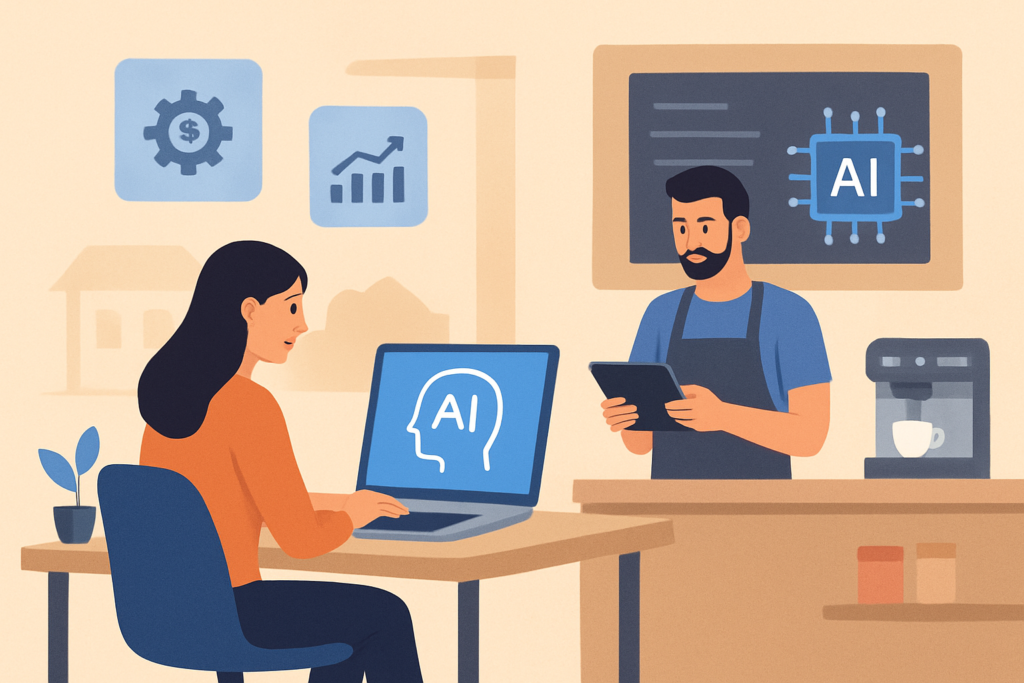
Artificial intelligence is no longer just a tool for tech giants and Fortune 500 companies. In 2026, AI has become an essential asset for small businesses, helping them compete more effectively, streamline operations, and deliver better customer experiences. Here’s how AI is transforming the small business landscape this year.
1. Intelligent Customer Service Automation
Small businesses are leveraging AI-powered chatbots and virtual assistants to provide 24/7 customer support without hiring additional staff. These systems can handle routine inquiries, process orders, and even troubleshoot common problems. Unlike earlier versions, 2026’s AI customer service tools understand context, detect emotional tone, and seamlessly escalate complex issues to human representatives when necessary.
This technology has enabled small businesses to deliver enterprise-level customer service on a modest budget, significantly improving customer satisfaction while reducing response times from hours to seconds.
2. Predictive Analytics for Inventory Management
AI-driven inventory systems are helping small retailers and e-commerce businesses optimize their stock levels with unprecedented accuracy. These systems analyze historical sales data, seasonal trends, local events, and even weather patterns to predict future demand. This means fewer stockouts of popular items and less capital tied up in slow-moving inventory.
Small businesses report reducing inventory costs by 15-30% while simultaneously improving product availability, creating a win-win situation for both profitability and customer satisfaction.
3. Personalized Marketing at Scale
Marketing automation has reached new heights in 2026. AI marketing platforms can now create personalized campaigns for individual customers based on their browsing behavior, purchase history, and preferences. These systems automatically segment audiences, generate custom email content, optimize send times, and even create variations of social media ads tailored to different demographic groups.
Small businesses that once struggled to compete with larger companies’ marketing budgets can now deliver highly targeted campaigns that rival those of major corporations, often at a fraction of the cost.
4. Automated Financial Management and Forecasting
AI accounting assistants have revolutionized how small businesses manage their finances. These tools automatically categorize expenses, reconcile accounts, flag unusual transactions, and generate financial reports. More impressively, AI financial forecasting tools can predict cash flow patterns, identify potential shortfalls before they occur, and suggest optimal times for major purchases or investments.
This level of financial insight was previously available only to businesses that could afford dedicated CFOs or expensive consulting services.
5. Smart Hiring and HR Management
Finding and retaining quality employees remains a challenge for small businesses, but AI recruitment tools are evening the playing field. These systems can screen resumes, schedule interviews, conduct initial video assessments, and even predict candidate success based on various factors. Beyond hiring, AI HR platforms help with employee scheduling, performance tracking, and identifying potential retention issues before employees decide to leave.
Small businesses using these tools report reducing time-to-hire by 40% and improving employee retention rates significantly.
6. Dynamic Pricing Optimization
AI pricing engines allow small businesses to implement sophisticated dynamic pricing strategies that adjust in real-time based on demand, competition, inventory levels, and market conditions. What was once the exclusive domain of airlines and hotel chains is now accessible to local shops, service providers, and small online retailers.
These systems help maximize revenue during high-demand periods while remaining competitive during slower times, often increasing overall profitability by 10-20% without alienating customers.
7. Content Creation and Social Media Management
Perhaps one of the most visible changes is in content creation. AI content assistants help small businesses maintain an active online presence by generating blog posts, social media updates, product descriptions, and email newsletters. While human oversight remains important, these tools dramatically reduce the time needed to maintain consistent marketing communications.
Additionally, AI social media managers can determine the best posting times, suggest trending hashtags, and even respond to comments and messages with appropriate, brand-consistent replies.
Comparison: Traditional vs. AI-Enhanced Operations
| Business Function | Traditional Approach | AI-Enhanced Approach | Average Time Savings |
|---|---|---|---|
| Customer Service | Phone/email support during business hours | 24/7 AI chatbot with human escalation | 60-70% |
| Inventory Management | Manual tracking and periodic reordering | Predictive analytics with automated alerts | 40-50% |
| Marketing Campaigns | Generic mass emails and ads | Personalized, AI-targeted campaigns | 50-60% |
| Financial Reporting | Monthly manual bookkeeping | Real-time automated reporting | 70-80% |
| Content Creation | Outsourcing or owner-created | AI-assisted with human refinement | 50-65% |
Frequently Asked Questions
Q: How much does it cost for a small business to implement AI tools?
A: Many AI tools for small businesses operate on subscription models ranging from $20 to $500 per month, depending on the functionality and scale. Some basic AI features are even included in existing software platforms at no additional cost. Most small businesses can start with AI implementation for under $200 monthly.
Q: Do I need technical expertise to use AI tools in my small business?
A: No. Most modern AI business tools are designed with user-friendly interfaces specifically for non-technical users. They typically require no more technical skill than using standard business software like email or accounting programs. Many providers offer tutorials, customer support, and setup assistance.
Q: Will AI replace human employees in small businesses?
A: AI is primarily augmenting human capabilities rather than replacing employees in small businesses. It handles repetitive, time-consuming tasks, allowing employees to focus on higher-value activities like relationship building, creative problem-solving, and strategic thinking. Most small businesses use AI to do more with their existing team rather than to reduce headcount.
Q: How do I know which AI tools are right for my business?
A: Start by identifying your biggest operational pain points—whether it’s customer service response times, inventory management, marketing effectiveness, or financial tracking. Then research AI solutions specifically designed to address those challenges. Most AI platforms offer free trials, allowing you to test before committing.
Q: Is my business data safe with AI tools?
A: Reputable AI business platforms implement strong security measures including encryption, secure data centers, and compliance with regulations like GDPR and CCPA. Always review a provider’s security credentials, read their privacy policy, and choose established vendors with proven track records in data protection.
Q: Can AI help my brick-and-mortar business, or is it mainly for online companies?
A: AI benefits both physical and online businesses. Brick-and-mortar stores use AI for inventory management, in-store customer analytics, smart scheduling, local marketing optimization, and point-of-sale insights. Many AI tools are specifically designed with traditional retail and service businesses in mind.
As we progress through 2026, the gap between AI-adopting small businesses and those relying solely on traditional methods continues to widen. The good news is that AI tools have never been more accessible, affordable, or user-friendly. Small businesses that embrace these technologies position themselves not just to survive but to thrive in an increasingly competitive marketplace.